
VISITBALLATER
Castles

Crathes Castle
Crathes sits on land given as a gift to the Burnetts of Ley family by King Robert the Bruce in 1323. Crathes castle In the 14th and 15th centuries the Burnett of Leys built a fortress of timbers on an island they made in the middle of a nearby bog. This method of fortification, known as a crannog, was common in the Late Middle Ages. Construction of the current tower house of Crathes Castle was begun in 1553 but delayed several times during its construction due to political problems during the reign of Mary, Queen of Scots. It was completed in 1596 by Alexander Burnett of Leys, and an additional wing added in the 18th century. Alexander Burnett, who completed the construction of Crathes, began a new project, the early 17th-century reconstruction of nearby Muchalls Castle. That endeavour was completed by his son, Sir Thomas Burnett. Crathes Castle served as the ancestral seat of the Burnetts of Leys until Sir James Burnett, 13th Baronet gave it to the National Trust for Scotland in 1951. A fire damaged portions of the castle (in particular the Queen Anne wing) in 1966. Another historically important structure in this region linked to the Burnett of Leys family is Monboddo House.
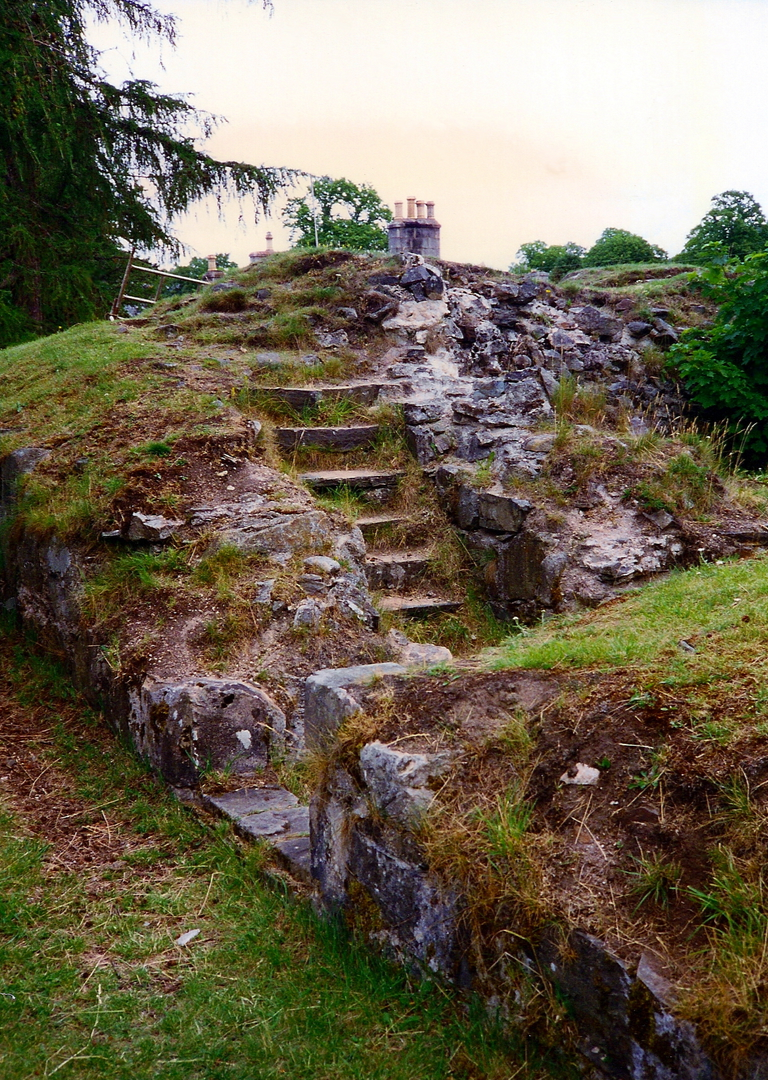
Kindrochit Castle
Kindrochit Castle (/kɪnˈdroʊxɪt/) is a ruined 14th-century fortification in Aberdeenshire, Scotland. It is located at Braemar, in a strategic position on the banks of the Clunie Water, a tributary of the River Dee. The ruins are protected as a scheduled monument.[1] Kindrochit was a hunting seat of King Robert II, who issued charters here most years between 1371 and 1388. In 1390 Robert III granted a licence to Malcolm Drummond to build a new tower on the site.[1] The present ruins comprise the ground floor of the tower, measuring around 19.3 by 13 metres (63 by 43 ft). The site of the earlier royal lodge was excavated in the 1920s and included a hall around 30 by 9 metres (98 by 30 ft), with square towers at each corner.[1][2] John Erskine, Earl of Mar showed the ruined castle at Kindrochit to John Taylor when the poet made his Pennyles Pilgrimage to Scotland in 1618. Taylor, who rode with the Earl from Braemar Castle, was told that Malcolm Canmore had built the castle in the 11th century. He thought it remarkable because he did not see another house in the next 12 days of their ride.[3] C. Michael Hogan has suggested that Kindrochit Castle, as well as Kildrummy and Durris Castles, were likely sited based upon strategic positions relative to the ancient Elsick Mounth trackway, which provided a strategic crossing of the Mounth of the Grampian Mountains.[4]

Braemar Castle
An important garrison after the 1745 Jacobite rising, Braemar Castle had been attacked and burned by John Farquharson, the Black Colonel of Inverey during the Jacobite rising of 1689, to prevent it from being used as a garrison by Government troops. In 1716 the castle was forfeited to the Crown following the Earl of Mar's leadership of the 1715 Jacobite rising.[4] The castle and lands were purchased by John Farquharson, 9th Laird of Invercauld but the building was left in ruins until 1748 when it was leased to the government at a fee of £14 per year, now to serve as a garrison for Hanoverian troops. Rebuilding started under the command of John Adam, Master Mason to the Board of Ordnance.[2] In 1831 the military garrison was withdrawn and the castle returned to the Farquharson clan. Restoration to provide a family home began under the 12th Laird of Invercauld who entertained Queen Victoria there when she attended the Braemar Gatherings in the grounds of the castle. In 1800 Braemar Castle was documented to have its moat intact.[5] It has also been featured in the video to Andy Stewart's "A Scottish Soldier". Since 2006 the castle has been leased to the local community. It is run on behalf of the community by local charity, Braemar Community Ltd and staffed by local volunteers, and an ambitious restoration program has been started. It reopened to the public in 2008.
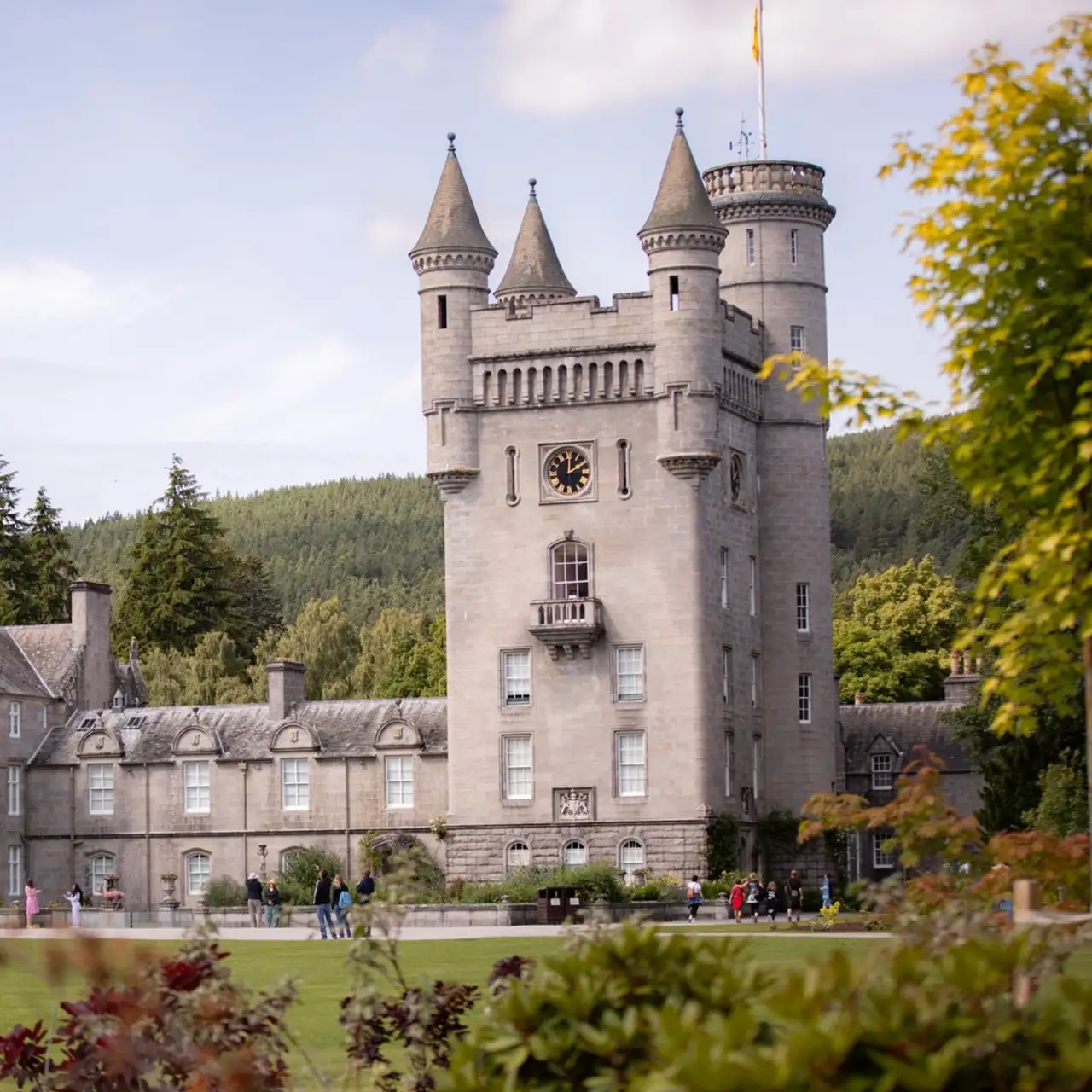
Balmoral Castle
Balmoral Castle (/bælˈmɒrəl/) is a large estate house in Royal Deeside, Aberdeenshire, Scotland, owned by King Charles. It is near the village of Crathie, 9 miles (14 kilometres) west of Ballater and 50 miles (80 kilometres) west of Aberdeen.[2] Balmoral has been one of the residences of the British royal family since 1852, when the estate and its original castle were bought from the Farquharson family by Prince Albert, the husband of Queen Victoria. Soon afterwards the house was found to be too small and the current Balmoral Castle was commissioned. The architect was William Smith of Aberdeen, and his designs were amended by Prince Albert. Balmoral remains private property of the Queen and is not part of the Crown Estate. The castle is an example of Scottish baronial architecture, and is classified by Historic Environment Scotland as a category A listed building.[1] The new castle was completed in 1856 and the old castle demolished shortly thereafter. The Balmoral Estate has been added to by successive members of the royal family, and now covers an area of approximately 50,000 acres (20,000 hectares). It is a working estate, including grouse moors, forestry and farmland, as well as managed herds of deer, Highland cattle, and ponies.
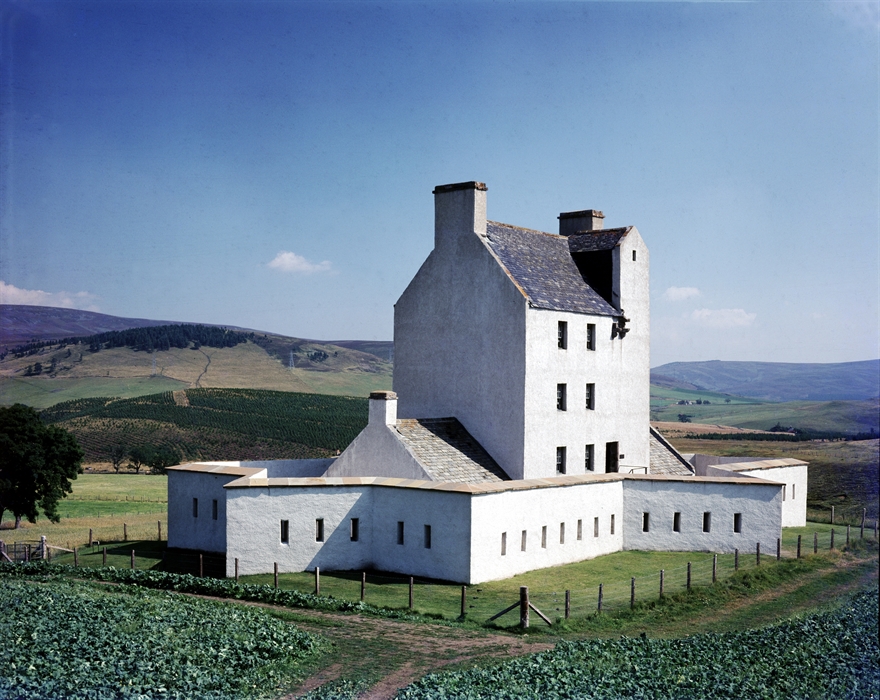
Corgarff Castle
The castle was built around 1530 by the Elphinstone family and leased to the Forbes of Towie.[1] In 1571 it was burned by their enemy, Adam Gordon of Auchindoun, resulting in the deaths of Margaret Campbell, Lady Forbes, her children, and numerous others, 26 in total, and giving rise to the ballad Edom o Gordon. In May 1607 the castle was captured from Alexander, 4th Lord Elphinstone by Alexander Forbes of Towie and his companions, including a piper called George McRobie. They used hammers and battering rams to break down the gate, then fortified the house with a garrison of "Highland thieves and limmers".[2] In 1626 it was acquired by the Earl of Mar. In 1645 it was used as an assembly point by the troops of the Marquis of Montrose. It was burned again in both 1689 and 1716 by Jacobite supporters. It was resettled by the Forbes family

Knock Castle
Knock Castle was granted to the Gordons of Abergeldie by the 4th Earl of Huntly after the battle of Corrichie, Fought between George Gordon 4th Earl of Huntly and the forces of Mary Queen of Scots commanded by James Stewart 1st Earl of Moray on October 28, 1562. During a time when the Highland Clans were constantly feuding among each other, circa 1392 to the 17th century it did not take much to stir bad blood between neighbours and start a fight over well what could amount to next to nothing, the following story is a prime example of one of these fights. A feud between the neighbouring Clan Forbes intensified when Henry Gordon 2nd Laird of Knock was murdered during a cattle raid by the Forbes and Clan Chattan men in 1592, his brother Alexander Gordon succeeded Henry and may have rebuilt or remodelled Knock Castle during his time there.